

Getting your Bitcoin transactions through the network without breaking the bank can feel like navigating a busy highway. Fees fluctuate based on demand, transaction size, and network congestion. Knowing how these fees are determined and how to manage them can save you money and make your crypto experience smoother. Whether you’re sending a small amount or planning a larger transfer, understanding bitcoin network fees is key to optimizing your transactions.
Bitcoin network fees are dynamic costs paid to miners for processing transactions. They depend on network activity, transaction size, and urgency. Managing these fees involves timing, fee estimation, and sometimes using second-layer solutions for savings.
What Are Bitcoin Network Fees and Why Do They Matter?
Bitcoin network fees are payments made to miners who validate and include transactions in blocks. These fees incentivize miners to prioritize your transaction over others. When the network is busy, fees tend to rise. Conversely, during quieter times, you can pay less.
Understanding these fees helps you avoid overpaying and prevents transactions from getting stuck. If you send transactions with too little fee during high demand, they may sit unconfirmed for days. On the other hand, overly high fees mean you’re spending more than necessary.
How Are Bitcoin Network Fees Calculated?
Bitcoin fees are primarily based on transaction size measured in bytes. Larger transactions with multiple inputs and outputs require more data to process. Miners pick transactions with the highest fees per byte first, especially when space in a block is limited.
Several factors influence the fee calculation:
- Transaction size: More inputs and outputs increase size.
- Network congestion: High activity pushes fees up.
- Urgency: If you need rapid confirmation, you’ll need to pay a higher fee.
- Wallet and address types: SegWit addresses are more efficient, often lowering fees.
Most wallets estimate the appropriate fee based on current network conditions. They analyze recent blocks and suggest a fee that balances cost and confirmation speed.
Practical process to manage fees
- Check current fee rates: Use reliable fee estimators or your wallet’s suggestions.
- Set your priority: Decide if you want quick confirmation or lower costs.
- Adjust your transaction: Use custom fee settings if available.
- Time your transaction: Send during times of lower network activity for savings.
- Consider second-layer solutions: For small or frequent payments, the Lightning Network offers significantly lower fees.
Strategies to Minimize Bitcoin Network Fees
Managing fees effectively can make a big difference in your overall costs. Here are some practical ways:
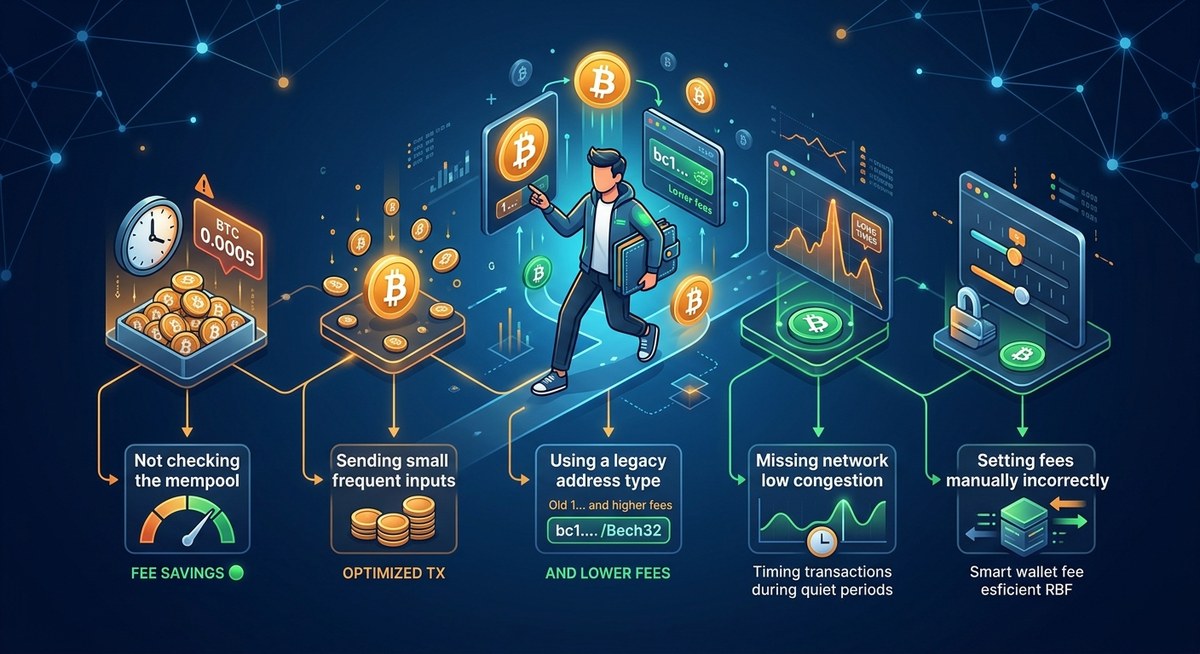
- Use SegWit addresses: These are more data-efficient, reducing transaction size and fees.
- Consolidate UTXOs: Combining unspent outputs when fees are low can decrease transaction size later.
- Time your transactions: Send when the network is less congested, such as during weekends or off-peak hours.
- Adjust fee settings manually: Most wallets allow you to pick a fee rate. Opt for a lower rate if your transaction isn’t urgent.
- Leverage second-layer solutions: The Lightning Network enables near-instant and cheap transactions for small amounts.
Techniques and common mistakes
| Technique | Mistake to Avoid |
|---|---|
| Using SegWit addresses | Sending transactions during peak congestion without adjusting fees |
| Timing transactions during low activity | Forgetting to check recent fee estimates before sending |
| Consolidating small UTXOs | Over-consolidating, which can lead to larger transactions later |
| Setting custom fee rates | Choosing too low a fee risking delayed confirmation |
Expert tip: “Always verify current network conditions using reputable fee estimators before sending. This ensures you don’t overpay or risk unconfirmed transactions.”
When to Use Second-Layer Solutions for Cost Savings
For many users, especially those conducting frequent or small transactions, second-layer networks like the Lightning Network can dramatically cut costs. This technology enables off-chain transactions that settle later on the main Bitcoin blockchain.
Using Lightning for small payments or microtransactions means paying a tiny fee, often just a fraction of a cent, compared to on-chain fees that can spike during busy periods.
Recognizing the Impact of High Fees on Your Bitcoin Use
High fees can deter users from making transactions or push them to seek alternatives. During periods of congestion, transaction costs may skyrocket, making small transfers less practical. This can slow down adoption and reduce the overall utility of Bitcoin as a daily payment method.
By understanding and managing network fees, you can ensure your transactions remain cost-effective and timely. Using features like fee estimation tools and second-layer solutions keeps your costs predictable.
The Future of Bitcoin Fees and How to Stay Ahead
As the network evolves with technologies like the Taproot upgrade and improvements in fee estimation algorithms, transaction costs are expected to stabilize somewhat. Still, demand and usage patterns will influence fees.
Staying updated with current network conditions through tools and community insights will help you time your transactions better. Planning ahead and leveraging technology can keep your Bitcoin experience smooth and affordable.
Putting It All Together to Save on Fees
Managing bitcoin network fees requires a mix of awareness, timing, and smart wallet choices. Here’s a simple process to keep your costs in check:
- Check current fee rates with a reliable estimator.
- Decide if you need fast confirmation or can wait.
- Adjust your wallet’s fee settings accordingly.
- Send transactions during low network activity periods.
- Use second-layer options for everyday or small-value transactions.
Remember, paying attention to network conditions and using the right tools can significantly reduce your costs. With a little planning, you can make Bitcoin transactions more economical and efficient.
Keep Your Transactions Friendly to Your Wallet and the Network
Understanding bitcoin network fees is about more than saving a few bucks. It’s about making your crypto journey smoother, faster, and more predictable. By applying these strategies, you’re in control of your transaction costs and timing. Keep an eye on network activity, choose the right tools, and consider second-layer solutions when appropriate.
Happy transacting! Your Bitcoin experience becomes more enjoyable when you master the art of managing fees effectively.








Leave a Reply