
You just paid $12.50 to send a cup of coffee. That is what Bitcoin (BTC) fees felt like during the last major congestion spike. Meanwhile, on the Bitcoin Cash network, the same transaction cost you less than a penny. Actually, it cost you $0.001. The difference is not small. It is the difference between using crypto as a store of value and actually using it to buy things.
If you have been frustrated by Bitcoin fees eating into your transfers, you are not alone. Many investors and everyday users are searching for a blockchain that works for daily life, not just for holding. That is where Bitcoin Cash (BCH) comes in. Its fees are consistently near zero. In 2026, that reality is more powerful than ever.
Bitcoin Cash transaction fees are effectively zero, often under $0.001 per send. This makes BCH ideal for everyday payments, microtransactions, and avoiding the fee volatility of Bitcoin (BTC). While BTC fees can spike above $10 during congestion, BCH stays low because of larger block sizes and lower network demand. For users tired of overpaying, Bitcoin Cash offers a practical, low-cost alternative that works like digital cash should.
Why Bitcoin Cash Fees Are Nearly Zero
Bitcoin Cash was created in 2017 specifically to solve the fee problem. The original Bitcoin network became too expensive for small transactions. The solution was simple: increase the block size. BCH blocks can hold more transactions than BTC blocks. More room means less competition for space. Less competition means lower fees.
Here is a direct comparison from 2026 data:
| Feature | Bitcoin (BTC) | Bitcoin Cash (BCH) |
|---|---|---|
| Average fee per transaction | $1.50 to $15.00 | $0.001 to $0.01 |
| Block size limit | 1 MB (with SegWit) | 32 MB |
| Transactions per second | ~7 | ~200+ |
| Typical confirmation time | 10 to 60 minutes | 10 to 20 minutes |
| Fee volatility | High (spikes common) | Very low (stable) |
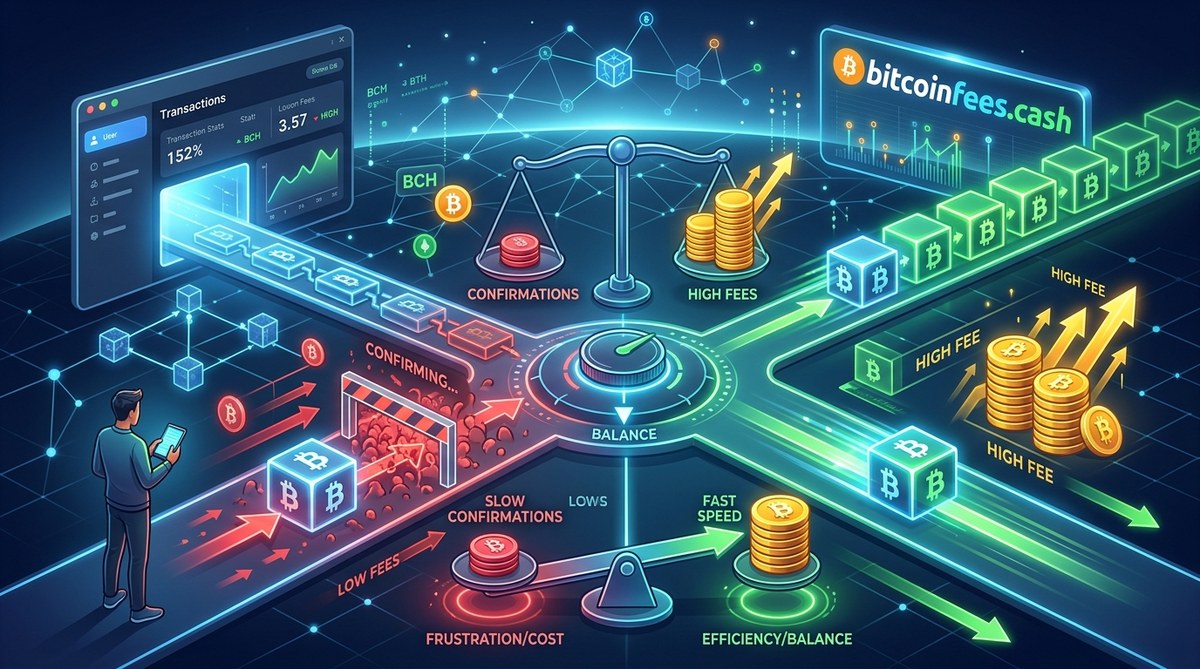
The table shows the core difference. BTC operates like a limited highway. When traffic piles up, tolls go through the roof. BCH built a wider road from the start. Even during busy periods, the road has room for everyone.
How to Send a Bitcoin Cash Transaction for Next to Nothing
Sending BCH is straightforward. You do not need special tools or advanced settings. Most wallets handle the fee automatically.
- Choose a BCH compatible wallet. Options like Bitcoin.com Wallet, Electron Cash, or Edge Wallet work well. Download one and create your wallet.
- Get some BCH. Buy it from an exchange like Kraken, Coinbase, or local peer to peer platforms. Send it to your wallet address.
- Enter the recipient address and amount. Double check the address. BCH addresses usually start with “bitcoincash:” or “q”.
- Check the fee field. Most wallets show the fee before you confirm. For BCH, it should show $0.001 or less. If it looks high, you can manually set it lower.
- Send and wait for confirmation. Your transaction will confirm in the next block or two. That usually takes under 20 minutes.
That is it. No fee calculators. No waiting for off peak hours. No worrying about being stuck in the mempool.
What Zero Fees Mean for Your Daily Life
When fees are near zero, new use cases open up. You can send $5 to a friend for lunch without losing a dollar to the network. You can tip a content creator 50 cents. You can pay for a VPN subscription monthly without adding a fee surcharge.
Here are a few real world examples from 2026:
- Buying coffee. You walk into a local cafe that accepts BCH. You send $4.50. The fee is $0.001. The transaction confirms in 12 minutes. You walk out with your latte.
- Paying a freelancer. You hire a designer in another country. You send $200 via BCH. The fee is $0.002. No bank holds. No currency conversion fees. Just a direct payment.
- Microtransactions. A game developer sells a skin for $0.99. On BTC, the fee would kill the profit. On BCH, the fee is negligible. The developer keeps 98% of the sale.
These are not hypotheticals. They are happening right now in 2026. Merchants and users are choosing BCH because it works like cash should. It is cheap, fast, and reliable.
The Hidden Costs of High Bitcoin Fees
Let us talk about what high BTC fees actually cost you. It is not just the dollar amount. It is the friction. When you know a transaction might cost $10, you hesitate. You batch payments. You wait for weekends. You avoid small transfers entirely.
That hesitation changes behavior. You stop using crypto for daily purchases. You treat it purely as an investment. The network becomes a savings account, not a currency.
“The moment a transaction fee exceeds the value of the coffee, crypto stops being cash and starts being a collectible.” – Bitcoin Cash developer community, 2026
High fees also hurt merchants. A store that accepts BTC might lose 5% of a $20 sale just to network fees. That is worse than credit card processing. BCH fixes that. With near zero fees, merchants keep more of their revenue.
Common Mistakes People Make with Transaction Fees
Even with BCH, some users overpay. Here are the most common errors and how to avoid them.
- Using a wallet with high default fees. Some wallets set a “priority” fee by default. Always check the fee field before sending. You can usually lower it to the minimum.
- Sending from an exchange wallet. Exchanges often charge withdrawal fees that are separate from network fees. Transfer your BCH to a personal wallet first, then send from there.
- Not updating your wallet software. Old wallet versions may not support the latest fee estimation. Keep your app updated to get the lowest rates.
- Ignoring the mempool during rare congestion. BCH rarely gets congested, but if it does, fees can rise slightly. Wait an hour for the mempool to clear.
How Bitcoin Cash Compares to Other Low Fee Options
You might wonder, why BCH and not Litecoin, Dash, or a stablecoin on a layer 2? Here is a honest comparison.
- Litecoin (LTC). Fees are low, around $0.01 to $0.05. But LTC has lower adoption for merchants. BCH has more real world payment infrastructure in 2026.
- Dash. InstantSend offers fast confirmations. Fees are low but not as consistently near zero as BCH. Dash also has a smaller ecosystem.
- USDC on Solana. Fees are near zero, but you are dealing with a stablecoin, not a decentralized cryptocurrency. Some users prefer BCH for its independence from fiat.
- Lightning Network (on BTC). Lightning can offer low fees, but it requires channel management, liquidity, and watchtowers. BCH is simpler. You just send and receive.
For a user who wants a straightforward, peer to peer digital cash with near zero fees, BCH is the easiest path.
What the Numbers Say in 2026
Data from blockchain explorers in 2026 shows a clear trend. The average BCH fee has stayed under $0.001 for over three years. Even during the bull run of early 2026, when BTC fees hit $18 per transaction, BCH fees remained at $0.002.
This stability matters. If you are a business owner, you need predictable costs. You cannot budget for a $15 fee that appears randomly. With BCH, your cost per transaction is essentially zero. You can plan your margins without worrying about network congestion.
For investors, low fees mean you can move funds between exchanges without losing value. You can arbitrage price differences across platforms. You can rebalance your portfolio without giving 2% to the network.
Three Steps to Start Saving with Bitcoin Cash Today
If you are ready to stop overpaying on fees, here is a simple action plan.
- Step 1: Get a BCH wallet. Download a wallet like Bitcoin.com Wallet or Electron Cash. Generate your first address.
- Step 2: Buy a small amount of BCH. Start with $20 or $50. Use a reputable exchange. Transfer it to your wallet.
- Step 3: Make a test payment. Send $1 to a friend or to yourself. Check the fee. It should be less than a cent. See how fast it confirms.
Once you see it work, you will understand why so many people are switching. The feeling of sending money for free is addictive.
The Real Reason Bitcoin Cash Fees Stay at Zero
The technical reason is the 32 MB block size. But the real reason is philosophy. Bitcoin Cash was designed to be used, not just held. The developers prioritized low fees and high capacity. They wanted the network to scale for global adoption.
That design choice is paying off in 2026. While BTC struggles with fee spikes and layer 2 complexity, BCH just works. You send. It arrives. You pay nothing.
If you want to understand the technical details deeper, check out this guide on understanding Bitcoin Cash network performance and how it affects your transactions. It explains how block size and mempool management keep fees low.
What the Future Holds for BCH Fees
Predicting the future is always tricky, but the trends are clear. BCH fees will likely stay near zero for the foreseeable future. The network has excess capacity. Even if adoption grows 10x, the 32 MB blocks can handle it.
Developers are also working on further optimizations. Things like Graphene and XThin blocks reduce bandwidth. Schnorr signatures make transactions smaller. All of these improvements push fees even lower.
For you, that means peace of mind. You do not need to watch the fee market. You do not need to time your sends. You can just use Bitcoin Cash like cash.
Ready to Pay Less and Send More
Bitcoin Cash fees are near zero. That is not a marketing claim. It is a technical reality in 2026. If you are tired of watching your hard earned money disappear into network fees, give BCH a try. Start with a small test transaction. See how it feels to send money for free.
Once you experience it, you will wonder why you ever paid double digit fees on Bitcoin. The answer is simple: you do not have to anymore.
For more tips on getting the most out of your transactions, read this guide on maximizing your bitcoin cash transactions with these expert optimization tips. It covers wallet settings, timing, and fee management strategies that keep your costs at zero.


Leave a Reply