

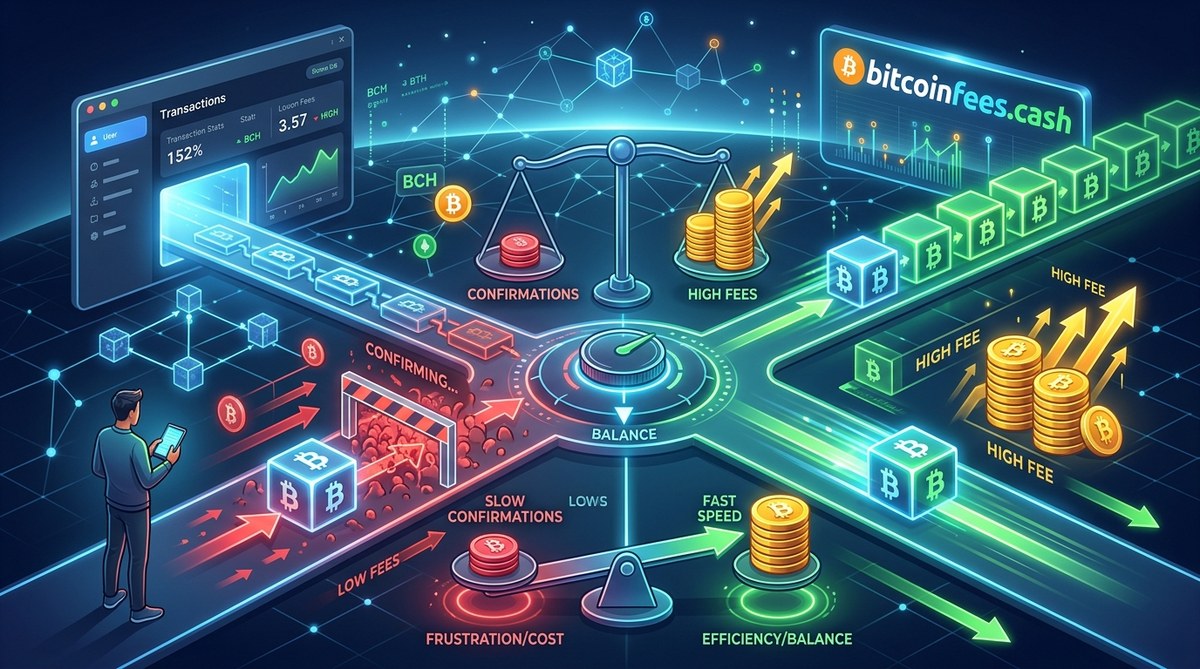
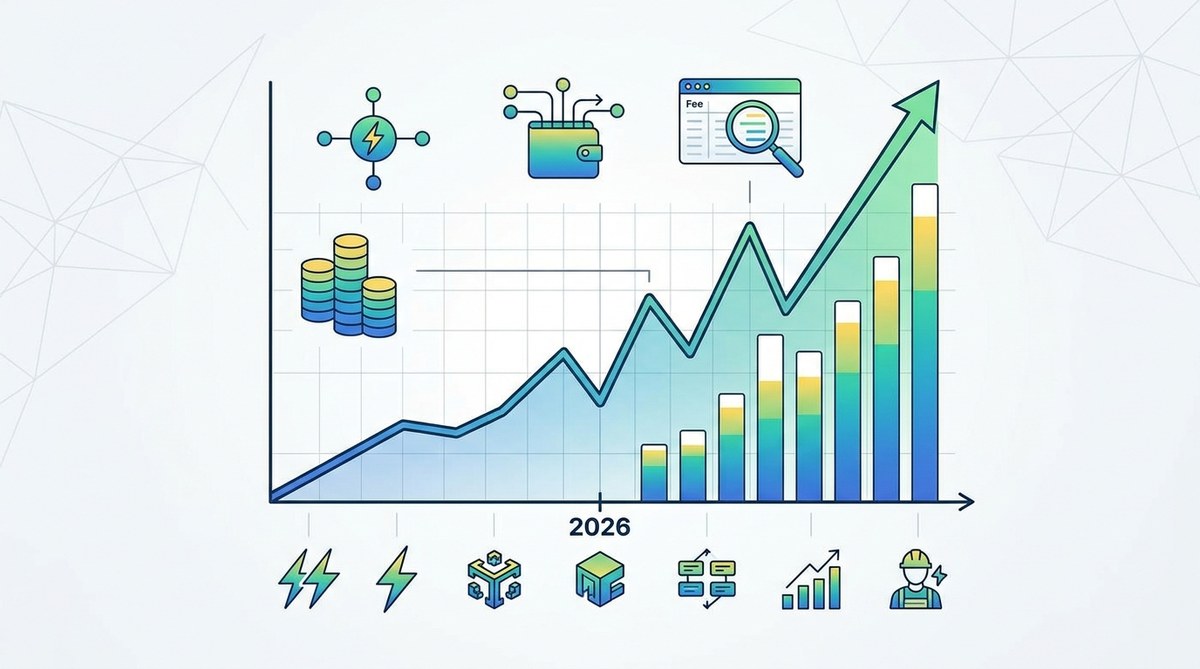
The bitcoin fee market in 2026 behaves less like a predictable monthly bill and more like a live auction where every bidder is fighting for the same limited block space. If you have sent a transaction during a U.S. trading day in the past few months, you have likely noticed that costs can swing wildly from one hour to the next. Institutional flow, ETF settlement windows, and even social media hype cycles now dictate when the mempool gets clogged. The traders who treat fee management as a core part of their strategy are the ones keeping more of their capital. The rest are leaving money on the table.
The bitcoin fee market in 2026 is driven by institutional settlement windows, ETF rebalancing cycles, and weekend mempool drains. To optimize costs, time your sends during Sunday mornings EST, use fee estimators that track the last 144 blocks, and batch all outgoing payments into one transaction. Avoid sending during U.S. market opens or halving-related hype periods. This approach can cut your average fee per transaction by 40 to 60 percent.
Why the Bitcoin Fee Market in 2026 Feels Different
Bitcoin’s block space is a scarce resource. Only one megabyte of transaction data can fit into each block, and blocks arrive roughly every ten minutes. In 2026, the demand for that space has shifted because of three structural changes.
First, spot Bitcoin ETFs now rebalance their holdings on a scheduled basis. When a fund manager moves a large chunk of Bitcoin between custodial wallets, it floods the mempool with high-fee transactions that need confirmation within a specific window. Second, the rise of Ordinals and BRC-20 tokens has added persistent background noise. These inscriptions take up block space without moving meaningful value, yet they still compete for inclusion. Third, the user base has matured. More people are using self-custody wallets, and those wallets often use automated coin selection that overpays on fees.
The result is a fee market that spikes on predictable schedules. If you understand those schedules, you can plan around them.
How to Read the Mempool Like a Fee Market Pro
The mempool is the waiting room for unconfirmed transactions. Every unconfirmed transaction sits there with a fee rate attached, measured in satoshis per virtual byte (sat/vB). Miners select the highest fee rate transactions first. Your job is to bid just high enough to get into the next block without overpaying.
Here is a practical process for reading the mempool and setting your fee rate correctly.
- Check the current mempool size on a block explorer or fee tracking tool. If the mempool is under 50 MB, competition is low. If it is above 150 MB, expect congestion.
- Look at the fee rate distribution. Focus on the 25th to 50th percentile range. That is where most rational users bid. If you bid in that range, you will likely confirm within three to six blocks.
- Identify the next block’s time target. If you need confirmation within the next hour, bid at the 75th percentile. If you can wait six to twelve hours, bid at the 10th percentile.
- Set your wallet’s fee rate manually. Do not rely on the wallet’s default “high priority” setting. Those defaults are often set to the 90th percentile and waste money.
- Broadcast the transaction and monitor it. If the mempool clears and your transaction remains unconfirmed after two hours, consider using Replace-by-Fee (RBF) to bump the fee rate slightly.
This five-step routine takes less than two minutes but can save you significant amounts over a year of regular transactions.
Key Factors That Move the Fee Market in 2026
Several forces now shape the bitcoin fee market more than raw price action. Understanding each one helps you predict when fees will rise or fall.
- ETF rebalancing days. Most spot ETFs rebalance on a weekly or biweekly schedule. These rebalances often hit on Tuesday or Wednesday mornings. Fees can jump 30 to 50 percent during those windows.
- Weekend lulls. Saturday and Sunday see significantly lower transaction volume. The mempool often drains to under 20 MB by Sunday morning EST. This is the best time to send low-priority transactions.
- Halving aftermath. The 2024 halving is behind us, but its effects on miner behavior still linger. Miners now process blocks with lower subsidy rewards, so they rely more on fee revenue. During periods of high price volatility, miners prioritize high-fee transactions even more aggressively.
- Ordinals and inscriptions. These data-heavy transactions occupy disproportionate block space relative to their economic value. They raise the floor for everyone else because they push the mempool’s average fee rate upward.
Common Mistakes That Inflate Your Bitcoin Fees
Most overpayment comes from a few easily avoidable mistakes. The table below breaks down the most frequent errors and the correct approach.
| Mistake | What Happens | Correct Approach |
|---|---|---|
| Using the wallet’s default fee setting | Overpays by 20 to 60 sat/vB | Set fee manually based on mempool data |
| Sending during U.S. business hours | Competes with ETF rebalancing and retail traffic | Send during weekends or late night EST |
| Not batching multiple outputs | Pays base fee per output instead of one combined fee | Combine all outgoing payments into one transaction |
| Ignoring mempool size trends | Confirms in hours when minutes would have been possible | Check mempool size before every send |
| Forgetting to use RBF | Gets stuck if fee rate was too low | Enable RBF on every transaction by default |
Timing Your Transactions for Maximum Savings
If you want to pay the lowest possible fee in 2026, timing is everything. The fee market follows a weekly rhythm that you can exploit.
- Sunday mornings between 6:00 AM and 10:00 AM EST. The mempool is at its cleanest. Most U.S. users are asleep or offline. European activity has not ramped up yet. This window consistently produces the lowest fee rates of the week.
- Wednesday afternoons. Avoid sending between 1:00 PM and 4:00 PM EST. This is when ETF rebalancing activity peaks. Fee rates can double or triple during these hours.
- After major price movements. If Bitcoin’s price moves more than 5 percent in a single day, expect a fee spike within 12 to 24 hours as traders reposition their holdings. Wait for the mempool to settle before sending.
Expert advice from a veteran on-chain analyst: “Treat your transaction fee like a limit order, not a market order. Set your sat/vB rate based on the 25th percentile of the current mempool, and use RBF to adjust upward only if needed. Most people overpay because they panic-bid at the 90th percentile. Patience pays in satoshis.”
Tools You Should Be Using to Track Fees
You do not need to guess. Several free tools give you real-time mempool data and fee rate estimates.
- Mempool.space. Shows the current mempool size, fee rate distribution, and recommended fees for different confirmation speeds. Use the “next block” and “one hour” estimates as your reference.
- Bitcoin Fees. This site provides historical fee data and trend lines. You can see how fee rates have moved over the past week, month, or year. This helps you spot recurring patterns.
- Your wallet’s custom fee option. Most modern wallets like Sparrow, Electrum, or BlueWallet allow you to set a custom sat/vB rate. Use the data from the tools above to input a precise number.
For a deeper look at how fee structures work under the hood, check out our guide on maximizing your bitcoin transactions by understanding fee structures. It covers the technical details behind the numbers.
How to Batch Transactions and Save on Every Send
Batching is the single most effective technique for reducing your average fee cost. If you need to send Bitcoin to three different addresses, do not create three separate transactions. Combine all outputs into a single transaction. The base fee is paid once, and each additional output adds only a small amount of data.
Here is a simple batching workflow.
- Collect all destination addresses and amounts before you open your wallet.
- Use a wallet that supports multiple outputs in one transaction.
- Set the fee rate based on the current mempool conditions for that single transaction.
- Broadcast once.
If you run a business or regularly pay multiple vendors, batching can cut your monthly fee spend by more than half. For everyday users who send to friends or family, batching a week’s worth of payments into one Sunday morning transaction is a smart habit.
Why Paying the Highest Fee Does Not Guarantee the Fastest Confirmation
A common misconception is that paying a 90th percentile fee rate guarantees inclusion in the very next block. That is not how it works. Miners select transactions based on fee rate, but they also consider transaction size and the overall block template. If you pay 100 sat/vB but your transaction is large, a miner might still prefer a smaller transaction paying 80 sat/vB because it fits more easily into the block’s remaining space.
The real guarantee is that a transaction paying in the 75th percentile will confirm within three blocks on average. Anything above that is usually a waste. The only time to pay the highest rate is during extreme congestion when you need confirmation within ten minutes, and even then, you might not get it if the mempool is too deep.
A Weekly Schedule for Fee Optimization
To make this practical, here is a weekly schedule that aligns with the bitcoin fee market in 2026.
- Saturday evening. Review your pending outgoing payments for the coming week. Prepare a batch transaction.
- Sunday morning 7:00 AM EST. Check the mempool. If it is under 30 MB, broadcast your batch transaction with a fee rate at the 10th percentile.
- Monday through Thursday. Avoid sending on-chain transactions unless absolutely necessary. Use the Lightning Network for small payments instead.
- Friday. If you missed the Sunday window, Friday evening after 8:00 PM EST is the next best option. Mempool activity drops as the weekend approaches.
This schedule alone can reduce your average fee per transaction by 40 to 60 percent compared to sending at random times.
What the Fee Market Tells You About Network Health
The bitcoin fee market is a leading indicator of network congestion and user behavior. When fees stay elevated for multiple days, it suggests a sustained increase in demand for block space, often driven by institutional activity or a new token standard. When fees drop to single-digit sat/vB levels, the mempool is nearly empty, and the network is underutilized.
Tracking these trends helps you make better decisions beyond just fee setting. For example, if you see fees climbing steadily over a week, it might be a good time to move coins to cold storage before the congestion gets worse. If fees are at a yearly low, it is a signal that the network is quiet and ideal for large consolidations.
For more insight into how network conditions affect your costs, read our article on understanding bitcoin network congestion and how to avoid high fees.
How to Handle Stuck Transactions Without Overpaying
A stuck transaction is one that has been sitting in the mempool for hours or days with a fee rate too low to attract miners. Do not panic and do not double-spend without understanding the tools available to you.
The best solution is Replace-by-Fee (RBF). If you enabled RBF when creating the original transaction, you can broadcast a new version with a higher fee rate. Increase the fee by 5 to 10 sat/vB above the current 25th percentile. Do not jump to the 90th percentile. A small bump is usually enough.
If you did not enable RBF, you can try the Child-Pays-for-Parent (CPFP) method. Create a new transaction that spends an output from the stuck transaction and attach a high fee to the child transaction. Miners will see the parent and child as a package and include both.
Both methods work, but RBF is cleaner and cheaper. Make it a habit to enable RBF on every transaction you create.
The Future of Fee Markets Beyond 2026
The fee market will continue to evolve. Layer-2 solutions like Lightning and emerging protocols will absorb more of the everyday payment volume, leaving on-chain transactions primarily for settlement and large transfers. This should reduce the noise in the mempool over time, but it also means that the transactions that do settle on-chain will be higher value and more fee-sensitive.
For now, the strategies outlined here will keep you ahead of the curve. The traders and investors who treat fee management as a skill, not an afterthought, are the ones who preserve their capital in a market where every satoshi counts.
Your Next Move in the Bitcoin Fee Market
You now have a clear map of the bitcoin fee market in 2026. You know when to send, how to set your fee rate, which tools to use, and how to avoid the common traps that inflate costs. The next step is to put this into practice.
Start this Sunday morning. Open your wallet, check the mempool, and send your batched transaction with a fee rate at the 10th percentile. Watch it confirm within two blocks. Then do the same thing the following week. Within a month, the habit will become second nature, and your wallet will thank you.
If you want to go deeper into specific techniques, check out our guide on how to reduce bitcoin transaction fees without compromising speed in 2026. It covers advanced RBF strategies and coin control methods that power users rely on.









Leave a Reply