

Trying to guess how much you will pay in Bitcoin Cash fees next week can feel like trying to predict the weather for a picnic three states away. You know the conditions matter, but the local forecast changes by the hour. The good news? Unlike a summer thunderstorm, transaction fees on the Bitcoin Cash network follow patterns that are visible if you know where to look. This is not about price speculation. This is about understanding the cost to move value from point A to point B.
Bitcoin Cash was designed with a simple promise: keep transactions cheap and fast, even when the network gets busy. That design philosophy means the fee market behaves differently than the one on the legacy Bitcoin chain. But “different” does not mean “random.” By analyzing historical data, mempool pressure, and block space demand, you can make a solid guess about where fees are headed in the short term. Let’s walk through what the data actually says and how you can use it.
Bitcoin Cash fees are predictable because the network uses a large block design that absorbs demand. You can forecast fee trends by watching mempool size, block interval times, and halving cycles. When the mempool stays flat and blocks are not full, fees remain stable. Plan your transactions around known congestion windows to save money.
What Drives Bitcoin Cash Fees in 2026?
Bitcoin Cash fees are not tied to a complex auction system like the one on the legacy Bitcoin network. Instead, the network relies on a simple formula: the cost to send a transaction is based on the size of the data in bytes, multiplied by a fee rate measured in satoshis per byte. Because blocks on Bitcoin Cash can hold up to 32 MB of data, there is plenty of room for transactions. More room means less competition for block space. Less competition means fees stay low.
But that does not mean fees are always a flat 1 satoshi per byte. Network activity spikes when people are moving money in bulk, when exchanges process withdrawals, or when a payment processor settles a large batch. During those windows, the mempool grows and the fee rate creeps upward. The key to predicting fees is watching the mempool, not the price chart.
One of the most reliable indicators is the relationship between incoming transaction volume and block production speed. If blocks are being found every 10 minutes on average, but the mempool is growing, that tells you demand is outpacing supply. Conversely, if blocks are arriving faster than average and the mempool is shrinking, fees are likely to drop. Tools that track mempool size in real time give you a clear picture of this balance.
The Halving Cycle Effect on Fee Patterns
Every four years, the block reward for miners gets cut in half. This event, known as the halving, has a direct impact on fee pressure. In 2024, the reward dropped from 6.25 BCH to 3.125 BCH. By 2026, we are well past that adjustment, and the market has found a new equilibrium. However, the months leading up to a halving tend to see increased speculation and trading volume. That activity pushes more transactions onto the network.
Historical data from the 2020 and 2024 halvings shows a clear pattern. In the six months before the halving, average fees often double from their baseline. The spike is not because the network is broken. It is because exchanges and custodial services adjust their internal systems, and users rush to move funds before the event. After the halving, fees usually settle back down within a few weeks.
For 2026, the next major cycle event is not until 2028. That means we are in a stable window where fee prediction is more about short term mempool analysis than macro events. Still, it is worth remembering that any surprise announcement from a major exchange or a regulatory ruling can cause a sudden burst of activity. The data can help you anticipate trends, but it cannot predict black swan events.
Reading the Mempool Like a Pro
The mempool is the waiting room for unconfirmed transactions. Every transaction you broadcast sits there until a miner includes it in a block. On Bitcoin Cash, the mempool rarely stays congested for long because blocks are large. But that does not mean the mempool is always empty. When it fills up, even slightly, the fee rate starts to climb.
You can track this by looking at the total size of the mempool in megabytes. If the mempool is sitting at 5 MB and blocks are being found every 10 minutes, the network can clear that backlog in a single block. Fees stay low. If the mempool grows to 50 MB, it will take a few blocks to clear, and miners will prioritize higher fee transactions. This is where the prediction gets interesting.
A practical approach is to set alerts for mempool size thresholds. When the mempool crosses a certain level, you know fees are about to rise. You can then decide to wait or to pay a slightly higher rate to get ahead of the queue. Many advanced users track the ratio of mempool size to average block size. If that ratio is below 1, the network is keeping up. If it is above 2, you should expect fee pressure.
How to Predict Short Term Fee Spikes
Short term fee prediction is less about magic formulas and more about pattern recognition. Here is a simple process you can follow:
- Check the time of day. Fees tend to spike during US business hours when payment processors and exchanges are most active. Late night and early morning UTC hours usually see lower fees.
- Monitor the mempool graph. Use a block explorer to watch the mempool size. A steady upward slope over two hours is a warning sign.
- Look at block interval averages. If the last 20 blocks arrived faster than 10 minutes apart, the network is ahead of schedule. If they are slower, expect a backup.
- Track whale movements. Large transfers from exchanges to cold wallets often signal an upcoming sell order, which can drive up transaction volume.
- Set a fee alert. Use a fee estimator tool to get notified when the recommended rate crosses your threshold.
This method is not perfect, but it gives you a statistical edge. The more data points you have, the better your prediction gets.
The Role of Block Space Demand
Bitcoin Cash has a different fee market than Bitcoin. On the legacy chain, block space is scarce, so fees are determined by a bidding war. On Bitcoin Cash, block space is abundant, so fees are determined by the cost of processing. That cost is low, but it is not zero. Miners still need to cover electricity and hardware expenses, and they earn that through a combination of block rewards and fees.
In 2026, the block reward is still significant enough that miners do not rely heavily on fees. That means they are willing to include low fee transactions because the reward covers their costs. This dynamic keeps fees stable. However, as the block reward continues to halve in future years, the fee component will become more important. For now, the market is in a comfortable spot.
The data supports this. Average Bitcoin Cash fees in 2026 have hovered between 0.00001 and 0.00005 BCH per transaction, depending on network activity. That is fractions of a cent. Compare that to Bitcoin, where fees can range from a few dollars to over fifty dollars during peak congestion. The difference is stark, and it is the reason many users are moving to Bitcoin Cash for everyday payments.
Common Mistakes When Predicting Fees
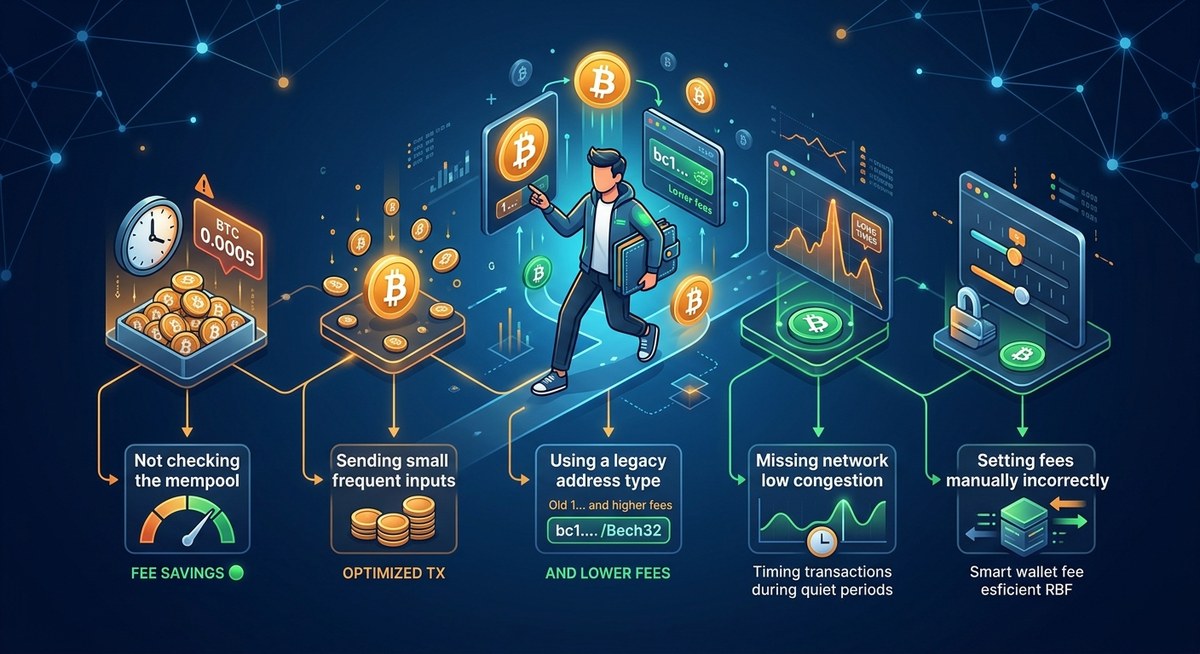
Even with good data, people make errors. Here is a table of common mistakes and how to avoid them:
| Mistake | Why It Happens | How to Fix It |
|---|---|---|
| Relying on a single fee estimator | Different tools use different algorithms and time windows | Cross reference at least three estimators before making a decision |
| Ignoring mempool size | Price charts do not show network pressure | Always pair price analysis with mempool data |
| Assuming fees are static | Even BCH fees move with demand | Check the fee rate before every transaction, no matter how small |
| Forgetting about exchange withdrawal spikes | Exchanges batch or unbatch at certain times | Avoid sending during known exchange processing windows |
| Not accounting for block time variance | A slow block can cause a temporary backlog | If you are in a hurry, pay a slightly higher rate to be safe |
Why Timing Matters for Your Wallet
Timing your transaction is not just about saving a few cents. It is about predictability. If you are running a business that accepts Bitcoin Cash, you need to know your costs in advance. A sudden fee spike can eat into your margins, especially if you process hundreds of transactions a day. By understanding the patterns, you can schedule your settlements during low activity windows and keep your operating costs flat.
For individual users, the savings might seem trivial. But over a year of regular transactions, the difference between paying 0.00001 BCH and 0.00005 BCH per transaction adds up. If you send 100 transactions a month, that is the difference between a few dollars and a few hundred dollars annually. The data is there. You just have to use it.
The Limits of Prediction
No model is perfect. Even with perfect mempool data, you cannot predict when a major exchange will pause withdrawals or when a new DeFi protocol will launch and attract sudden demand. What you can do is build a buffer. Keep your fee rate slightly above the minimum if you are in a hurry. Use a wallet that lets you set custom fees. And always check the mempool before you hit send.
The Bitcoin Cash network performance is remarkably consistent, but it is not immune to external shocks. The key is to treat fee prediction as a probability game, not a certainty. You are stacking the odds in your favor, not guaranteeing an outcome.
Practical Tools for Fee Prediction
You do not need to build your own analytics dashboard to predict fees. Several tools can do the heavy lifting for you. Block explorers show real time mempool data. Fee estimator websites provide recommended rates based on current conditions. And some wallets now include built in fee prediction features that alert you when the network is about to get busy.
If you want to go deeper, you can pull raw data from the Bitcoin Cash API and run your own analysis. This is a great option for developers or power users who want to build custom alerts. For everyone else, the standard tools are more than enough. The important thing is to check them regularly and not rely on memory.
How to Apply This in 2026
Start by tracking the mempool for one week. Write down the times of day when fees are lowest and highest. Note any patterns related to weekends or holidays. After a week, you will have a personalized fee calendar that is far more accurate than any generic guide.
Then, adjust your behavior. If you know that Tuesday mornings tend to have low fees, schedule your recurring payments for that window. If you are making a large purchase, split it into two smaller transactions and send them during off peak hours. These small adjustments add up.
For those who want to go even further, consider using the Lightning Network for very small payments. While Bitcoin Cash already has low fees, Lightning can reduce them to near zero for microtransactions. This is especially useful for streaming payments or machine to machine transactions.
The Bigger Picture
Predicting Bitcoin Cash fees is not about being psychic. It is about understanding the underlying mechanics of the network. The mempool, block size, and miner incentives all play a role. When you understand how these pieces fit together, you can make informed decisions about when to transact and how much to pay.
The data from 2026 shows that Bitcoin Cash remains one of the most cost effective ways to move value. Fees are low, blocks are fast, and the network is reliable. By applying the patterns we have discussed, you can keep your costs even lower and avoid the surprises that catch many users off guard.
A Final Word on Fee Forecasting
You now have a framework for thinking about Bitcoin Cash fees. You know what drives them, how to track them, and when to act. The next step is to put this into practice. Open a mempool tracker, set a few alerts, and start observing the network. The more you watch, the more intuitive the patterns will become.
Remember that fee prediction is a skill, not a one time trick. The network evolves, and so should your strategies. Stay curious, keep testing, and do not be afraid to adjust your approach. The small amount of effort you invest in understanding the fee market will pay off every single time you send a transaction.








Leave a Reply