

Paying a Bitcoin transaction fee can feel like a guessing game. One minute you send $5 worth of BTC and the fee is $0.30. The next minute it jumps to $3.50 for no obvious reason. The truth is, every fee is calculated by a clear set of rules. By 2026, those rules are the same as when Bitcoin launched, but the market around them keeps evolving. Understanding what drives your fee gives you control over how much you pay and how fast your transaction confirms.
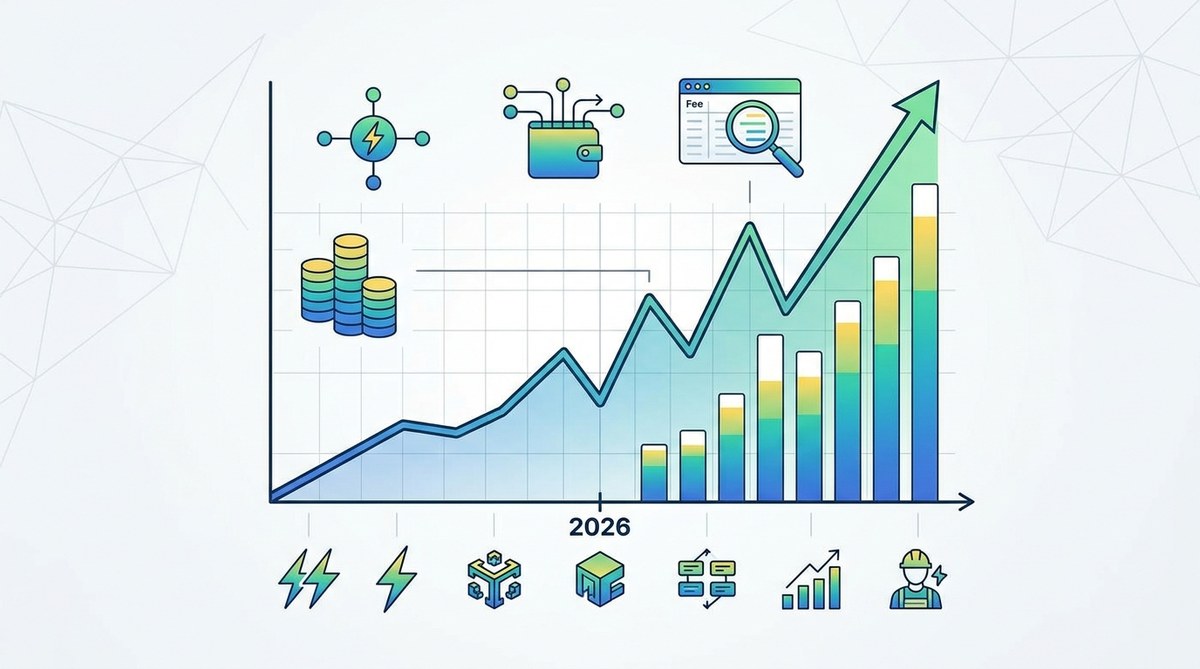
Your Bitcoin transaction fee is set by a market auction for limited block space. The fee depends on transaction size (in vbytes), network congestion, and how fast you want confirmation. In 2026, fees remain volatile because of demand from traders, Ordinals, and institutional moves. You can reduce fees by using SegWit addresses, avoiding peak hours, and consolidating UTXOs.
The Core Drivers of Bitcoin Fees in 2026
Bitcoin processes roughly 4,000 to 7,000 transactions every ten minutes per block. That is a hard limit. When more people want to send bitcoin than there is room in the next block, they compete by bidding higher fees. Miners pick the highest paying transactions first. This auction determines everything.
Here are the main forces at work:
- Block space scarcity – each block holds about 1 to 2 MB of data. That does not change.
- Mempool backlog – all unconfirmed transactions wait in the mempool. A deep backlog pushes fees up.
- Demand spikes – bull runs, exchange outflows, and Ordinals inscriptions can flood the network.
- Transaction size – the number of bytes your tx uses influences your fee, not the dollar amount.
- Fee rate you choose – measured in satoshis per virtual byte (sat/vB). You control this.
2026 has seen new fee surges during Bitcoin halving hype cycles and large institutional ETF flows. The pattern is predictable: more users + fixed block space = higher costs.
How Transaction Size Affects Your Fee
Your transaction fee is calculated as: fee = (transaction size in vbytes) x (fee rate in sat/vB). The size does not depend on how much bitcoin you send. It depends on the number of inputs and outputs in the transaction.
A typical transaction with one input and one output might be around 140 vbytes. If you have many small UTXOs (unspent transaction outputs), the tx can be 500 vbytes or more. You pay more because the data takes up more block space.
The table below shows common trade-offs:
| Transaction type | Typical vbytes | Fee at 20 sat/vB | Fee at 100 sat/vB |
|---|---|---|---|
| Simple send (SegWit) | 110 | $0.11 | $0.55 |
| Simple send (Legacy) | 225 | $0.23 | $1.13 |
| Multi-input (4 inputs) | 400 | $0.40 | $2.00 |
| Multi-input (10 inputs) | 800 | $0.80 | $4.00 |
Fees estimated at $50,000 BTC price. Actual sat/vB rates change every block.
Using a SegWit address reduces your vbyte count by about 30% for the same inputs. Learn more about how to maximize your bitcoin transactions by understanding fee structures. Consolidating your UTXOs during low fee periods also helps keep your future sends smaller.
Network Congestion and the Mempool
The mempool is the waiting room for all unconfirmed transactions. When the mempool is empty, fees are low because there is no competition. When it is piled high with thousands of transactions, fees spike.
In 2026, we have seen mempool sizes hit 200 MB during big news days. For example, when a top exchange announced spot ETF inflows, fee rates jumped from 8 sat/vB to 120 sat/vB in less than two hours. Users who paid 8 sat/vB waited over 48 hours for confirmation.
“The best time to send Bitcoin is when the mempool is under 10 MB. You can check mempool.space or a real-time fee tracker. If you see it climbing, wait a few hours or adjust your fee rate accordingly.” – Anonymous crypto analyst on a 2026 industry panel
You can also set your wallet to use a custom fee. Most wallets give you options like “economy”, “normal”, or “priority”. Do not trust the default if you are in a rush. Use a tool that shows the current recommended sat/vB for your desired confirmation time.
A Step-by-Step Guide to Estimating Your Fee
Follow these steps to avoid overpaying or getting stuck:
- Check the current mempool status. Visit a site like mempool.space or use a fee estimation API. Look at the recommended fee rates for the next block vs. six blocks.
- Calculate your transaction size. Most wallets show the size in vbytes before you sign. If you have many small inputs, it will be larger.
- Pick a fee rate. Use the “economy” rate if you can wait an hour. Use the “high priority” rate if you need confirmation in one block. Multiply size by rate.
- Set a custom fee in your wallet. Do not use the slider blindly. Input the exact sat/vB you chose.
- Broadcast and monitor. After sending, check if it confirms in the expected time. If it gets stuck, you may need to use Replace-by-Fee (RBF) to bump the fee.
If you are sending to an exchange, they often set their own withdrawal fees, which are separate from network fees. For a detailed breakdown of this process, read our guide on how to optimize your bitcoin transaction fees for faster confirmations.
Common Mistakes That Inflate Your Costs
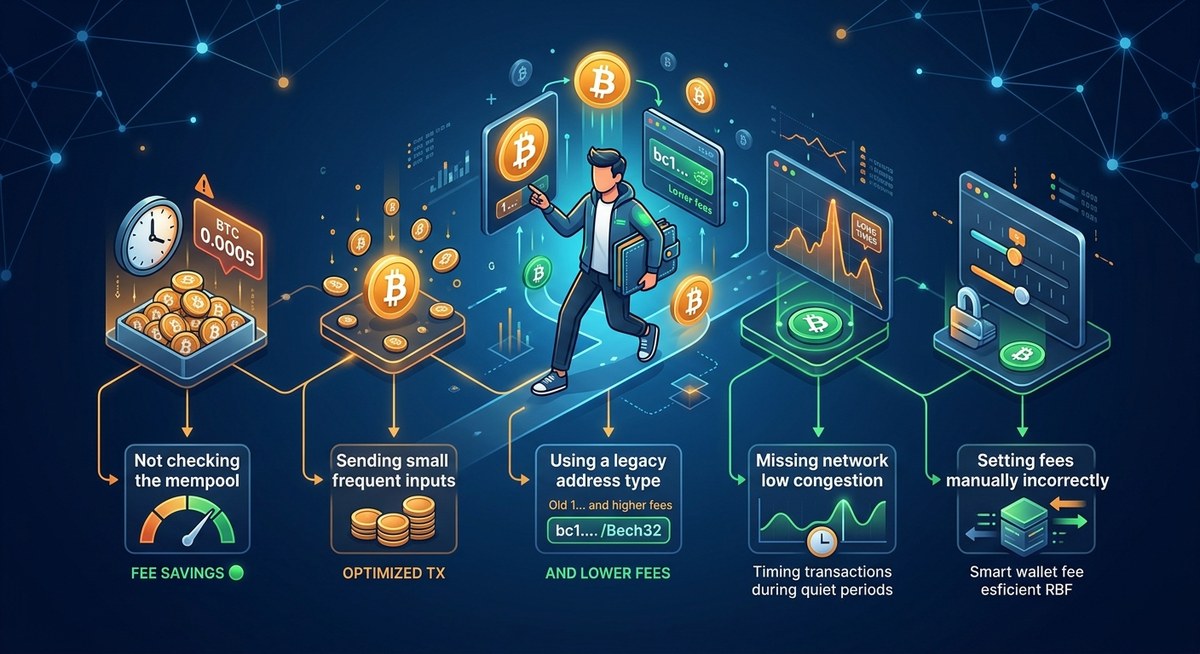
Many users pay more than necessary. Here are the most frequent errors and how to fix them:
| Mistake | Why it costs you | Correct approach |
|---|---|---|
| Using a legacy address | Larger transaction size (225 vs 110 vbytes) | Switch to a SegWit or native SegWit (Bech32) address |
| Sending every small UTXO as a separate tx | Each tx has its own fee, adding up | Consolidate UTXOs when fees are low, e.g., on a Sunday morning |
| Not checking mempool before sending | Paying 50 sat/vB when 10 sat/vB would clear within an hour | Check a fee tracker app or website |
| Using the wallet’s “recommended” fee blindly | Wallets often overestimate to ensure fast confirmation | Set a custom fee based on real-time data |
| Broadcasting during a fee spike | Paying a premium for no reason | Wait for the mempool to drain, or use the Lightning Network for small amounts |
For a deeper look at these pitfalls, see our article on 5 key factors that determine your bitcoin transaction fees right now.
Timing Matters When the Network is Quiet
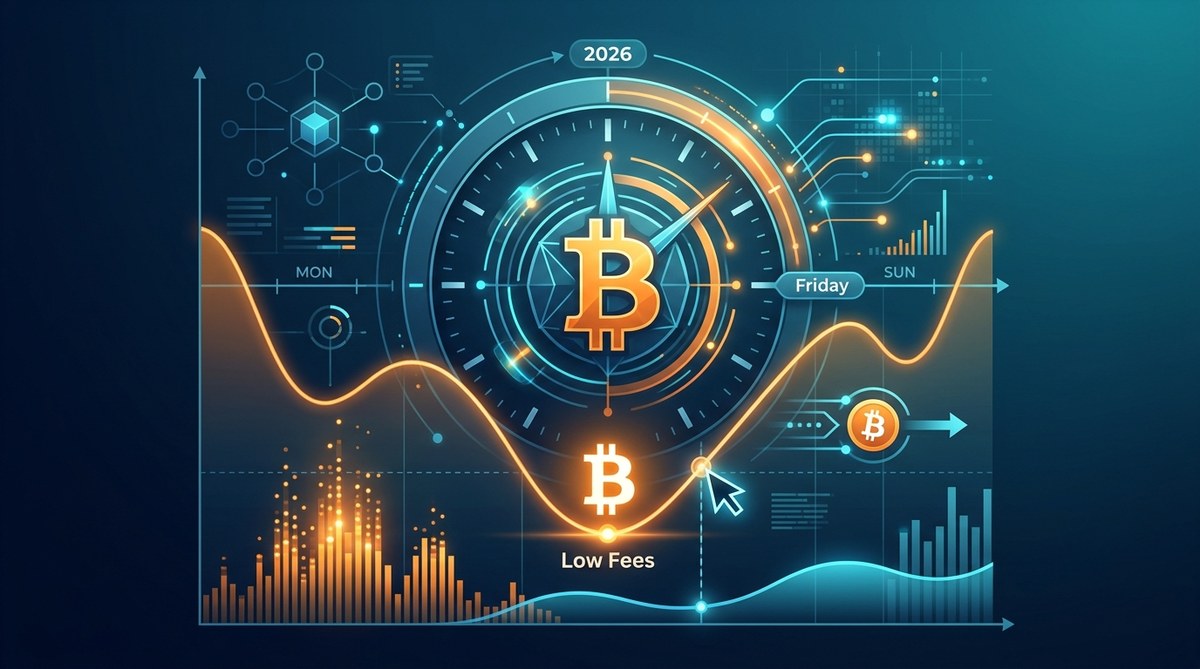
Bitcoin usage follows human patterns. Weekends often have lower fee rates because traders take breaks. Late night UTC hours also see less activity. Holidays like Thanksgiving or Christmas in the US tend to be calm.
In 2026, the quietest periods have been Saturday mornings (Pacific time) and the early hours of Monday before Asia wakes up. If you can plan your transactions for those windows, you might pay half the fee.
There is a trade-off: if you send during quiet times, you might still wait extra blocks if block production slows. But usually, the lower fee rate more than compensates for the wait.
For a more complete strategy, check out how to leverage network conditions in 2026 to minimize bitcoin transaction fees.
Wrapping Up Your Fee Strategy for 2026
Knowing what determines your Bitcoin transaction fee puts you in the driver’s seat. You no longer have to guess or overpay. By controlling your transaction size, picking the right fee rate, and timing your sends when the network is calm, you can save significant money over time. The ecosystem in 2026 is more crowded than ever, but the fundamentals remain the same. Block space is limited. You are bidding for it. The better you understand the auction, the smarter your bids become.
Take five minutes before your next send to check the mempool and look at your UTXOs. Small habits like these can turn a frustrating fee into a manageable cost.








Leave a Reply