

You open your wallet to send a few hundred dollars in Bitcoin, and the network fee makes your eyes water. Twenty dollars. Forty dollars. Maybe more. You check the mempool and see a giant line of transactions waiting. The frustration is real. Why does a simple transfer sometimes cost as much as a nice dinner out? And more importantly, what can you do about it?
If you have been holding Bitcoin for a while, you have watched fees swing wildly. During certain periods, sending Bitcoin costs pennies. During others, the same transaction costs a small fortune. The answer is not random. It comes down to how Bitcoin is built, how people use it, and a few key factors that we can control if we know where to look.
Bitcoin fees go up when more people try to send money than the network can handle in each block. The limited space inside a 1 MB block forces users to outbid each other. However, you can lower your costs by choosing the right wallet, timing your transaction during quieter hours, using SegWit addresses, consolidating small inputs, and considering layer-2 solutions like the Lightning Network for small payments.
What Actually Determines a Bitcoin Transaction Fee?
Bitcoin does not charge a percentage based on how much you send. That is a common misunderstanding. Whether you move $50 or $50,000, the fee is based on the size of your transaction in bytes and the fee rate you choose (satoshis per virtual byte, or sat/vB).
Think of it like mailing a package. The price depends on the weight and how fast you want it delivered, not the value of the contents. A transaction with many small inputs (like change from previous sends) is heavier and costs more. A simple transaction from a fresh SegWit address is lighter.
The Two Main Fee Components
- Base fee: The network minimum required for a transaction to be accepted by miners. This is usually tiny.
- Priority fee: The extra amount you add to get miners to pick your transaction ahead of others in line.
Miners do not care about your story. They select the highest fee-paying transactions from the mempool for each new block. If your fee is too low, your transaction sits unconfirmed for hours or even days.
Why Are Bitcoin Fees So High Right Now in 2026?
Several forces come together to push fees upward. Here are the biggest drivers.
Network Congestion and the Mempool Backlog
The mempool is the waiting room for all unconfirmed Bitcoin transactions. It holds every send that has not yet been included in a block. When the mempool grows, competition for limited block space heats up. Users who want confirmation in the next hour have to raise their fees. The rest get stuck.
In 2026, we still see periodic floods of activity. Bull market rallies bring huge volume. Big exchange movements, institutional buys, and retail frenzy all cram into the same small blocks. When you see a massive spike in Bitcoin price, expect fees to spike too.
Block Size Remains Limited
Bitcoin’s block size is capped at 1 MB of raw data, or roughly 4 million weight units after SegWit. This limit is a security feature. It keeps the blockchain manageable and keeps mining decentralized. But it also creates a hard ceiling on how many transactions can settle every ten minutes. Currently, Bitcoin can handle about 5 to 7 transactions per second. Meanwhile, demand can surge to thousands of pending transactions per second.
The result is a bidding war for inclusion. The higher the demand, the higher the fee floor.
The Ordinals and Inscriptions Effect
Since early 2023, a new use case emerged: Ordinals, which allow users to inscribe data like images, text, and even small games directly onto Bitcoin satoshis. Inscriptions compete for the same block space as financial transactions. They tend to be large (hundreds of kilobytes each), so they push up the fee rate for everyone.
In 2026, inscriptions remain popular. While some upgrades like OP_CAT might eventually ease data storage, for now, each inscription takes up room that could have held dozens of regular transfers. This directly influences why Bitcoin fees stay elevated during periods of high minting activity.
UTXO Management from Your Own Wallet
Your wallet’s transaction history matters more than you think. Every time you receive Bitcoin, you get a new Unspent Transaction Output (UTXO). When you send Bitcoin, your wallet must pick which UTXOs to spend. If you have lots of tiny UTXOs (say 30 small payments from a faucet or change), the transaction becomes large in bytes. A large transaction costs more in fees.
Many users unknowingly carry around a “dusty” wallet. Consolidating UTXOs during low-fee periods can save you big later. That is one of the most effective ways to keep fees under control, as covered in our guide to mastering Bitcoin network fees to save money on transactions.
How to Tell If Fees Are High: A Practical Checklist
Instead of guessing, you can check the current state of the network in one minute. Here is a simple list to help you decide whether to send now or wait.
- Look at a mempool visualizer. Sites like mempool.space show the backlog and the fee rate needed for the next block.
- Check the “high priority” fee rate. If it is above 50 sat/vB, you are in a congested period.
- See if the mempool has more than 50 MB of pending transactions. That is a sign of congestion.
- Compare fees across different hours. Late night US Eastern time (midnight to 6 a.m.) often sees lower demand.
- Avoid sending during major exchange events, like exchange wallet consolidations or big token airdrops.
By reading signals like these, you can decide whether to wait a few hours or pay the premium.
What You Can Do to Pay Less Right Now
You do not have to accept eye watering fees as a fact of life. Here are proven strategies to cut your costs.
Use SegWit Addresses
SegWit (Segregated Witness) is a protocol upgrade that separates signature data from transaction data. SegWit transactions are smaller (up to 40% smaller than legacy transactions), which means lower fees for the same transfer. Most modern wallets create SegWit addresses by default, but some older ones still use legacy. Make sure your wallet uses a SegWit or native SegWit (bc1) address. If you receive payments to a legacy address, you are paying extra every time you send.
Send During Off Peak Hours
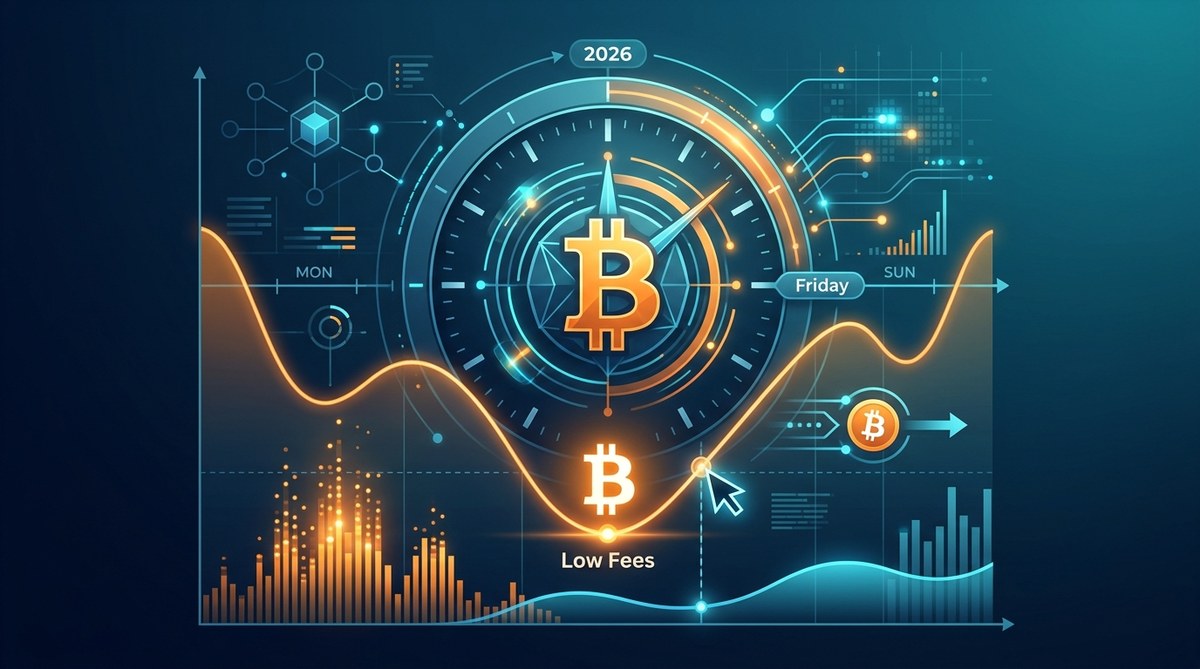
Bitcoin does not sleep, but its users do. Historically, weekends and late night hours in the US see less demand. If you can afford to wait a few hours, you can often get a confirmation for a lower fee rate. Tools like how to leverage network conditions in 2026 to minimize Bitcoin transaction fees can help you identify the best windows.
Use Replace by Fee (RBF) to Start Lower
Many wallets allow you to send a transaction with a lower fee initially, then bump it up later if the mempool tightens. This is called Replace by Fee (RBF). You mark your transaction as replaceable, and if it does not confirm, you can broadcast a new version with a higher fee. This way, you avoid overpaying upfront. You are only paying for the priority you actually need.
Consolidate Your UTXOs Periodically
When fees are low (like a quiet Sunday morning), take a few minutes to consolidate your small UTXOs into one or two larger ones. That turns many future transactions into simpler, smaller byte weight transactions. It is a classic example of a little maintenance saving you a lot later. Our article on how to reduce Bitcoin transaction fees without compromising speed in 2026 walks through the process.
Consider Layer 2 Solutions
The Lightning Network is the most popular second layer for Bitcoin. It enables instant, low fee payments by routing transactions off chain. You open a payment channel, send many small payments inside it, and settle on chain only when you close the channel. For everyday spending under a few hundred dollars, Lightning fees are usually less than a cent. If you use Bitcoin for regular purchases, Lightning is a game changer.
Common Fee Mistakes and How to Avoid Them
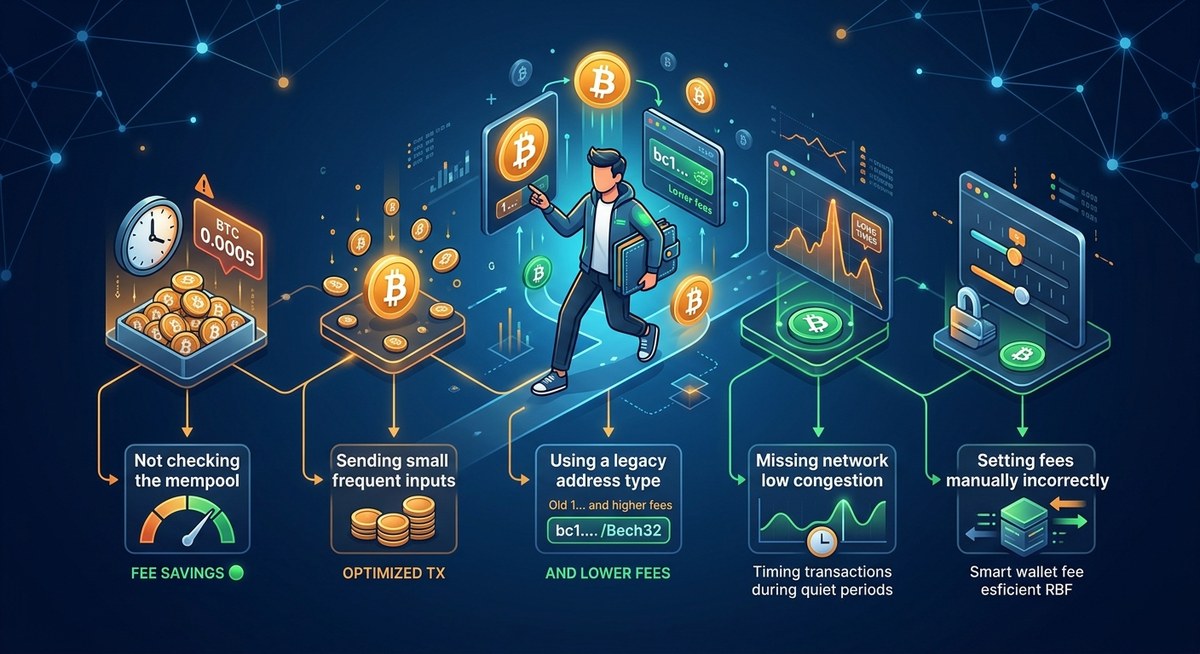
Even experienced users sometimes trip up. This table shows typical errors and the better way.
| Mistake | Why It Hurts | Better Approach |
|---|---|---|
| Using legacy address format | Larger transaction size, higher fee | Use native SegWit (bc1) addresses |
| Sending from an exchange directly without checking fee options | Exchanges often set a high priority fee to ensure fast confirmations | Withdraw to your own wallet and send from there with a custom fee |
| Not batching payments when sending to multiple addresses | Each separate send incurs a separate fee | Batch multiple outgoing payments into one transaction |
| Ignoring the mempool before sending | You overpay for priority you do not need | Wait for a low fee window or use a fee estimator |
| Keeping too many small UTXOs | Transaction becomes heavy and expensive | Consolidate during low fee periods |
A good rule of thumb: always look at current network conditions before hitting send. You can check our guide on understanding Bitcoin network congestion and how to avoid high fees for a full walkthrough.
A Step by Step Plan to Send with Lower Fees
If you want a repeatable process, follow these steps. They work for most Bitcoin wallets that let you set custom fees.
- Check the mempool backlog using a tool like mempool.space or a fee estimator service.
- Decide on your urgency. If you need confirmation within an hour, look at the “high priority” fee rate. If you can wait up to 24 hours, choose the “low priority” rate.
- Set your wallet to use a custom fee and enter the sat/vB rate you found (a bit above the low priority rate for safety).
- If your wallet supports RBF, enable it. This gives you an insurance policy.
- Send the transaction. Monitor it for 30 minutes. If it does not confirm, consider either waiting or using RBF to bump the fee.
- For future sends, consolidate your UTXOs during a calm period.
This method is exactly what we explain in detail in our guide on how to optimize your Bitcoin transaction fees for faster confirmations.
“Bitcoin fees are not a lottery. They follow predictable supply and demand dynamics. Once you understand the mempool and your own wallet hygiene, you can stop overpaying.” This advice from experienced Bitcoin users holds true in 2026.
The Bigger Picture: Why Should We Care About High Fees?
High fees hurt Bitcoin’s utility as a medium of exchange. If it costs $30 to send a $100 payment, people will look elsewhere. This is why networks like Bitcoin Cash focus on lower fees for everyday transactions. Some users have started exploring the cost benefits of using Bitcoin Cash for daily payments for coffee runs and small bills. But for many, Bitcoin remains the store of value, and they are willing to pay higher fees for security and liquidity.
The good news is that ongoing development in layer 2 and potential protocol upgrades (like OP_CAT or drivechains) may reduce fee pressure over time. But for now, the responsibility falls on each user to optimize their behavior. You have the tools. Use them.
Taking Control of Your Bitcoin Fees
You do not have to be a victim of high fees. You now know the causes: limited block space, a crowded mempool, heavy inscriptions, and your own UTXO management. You also know the solutions: choose SegWit, time your sends, use RBF, consolidate, and adopt the Lightning Network for small payments. Every single one of these strategies can save you money.
Start by checking the mempool before your next transaction. If fees are high, wait. If you must send, use a custom fee and enable RBF. Over a few months, these habits will add up to real savings. Bitcoin remains a powerful tool, and understanding its fee dynamics puts you in the driver’s seat.
For more hands-on tips on reducing costs, read our guide to the ultimate guide to reducing Bitcoin fees in 2026 for cost effective transactions. Your wallet will thank you.








Leave a Reply